 Oral Motor Development
Strengthening the oral motor skills that underpin clear speech, comfortable feeding, and confident communication in children of all ages.
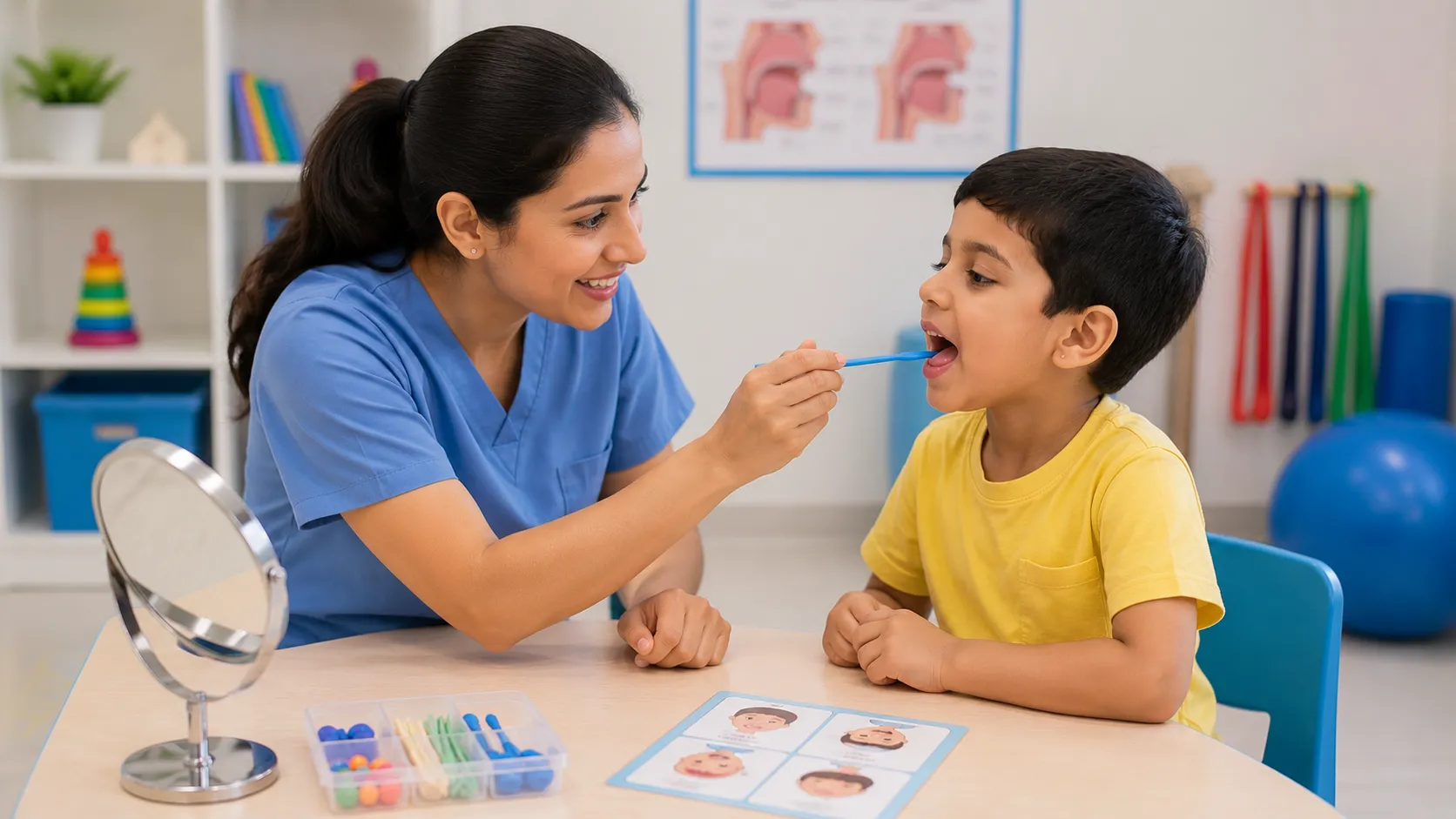
Oral Placement Therapy (OPT) is a specialised approach to developing oral motor skills — the precise, coordinated movements of the lips, tongue, jaw, and cheeks essential for clear speech production, safe swallowing, and effective feeding. When these muscles are weak, uncoordinated, or hypersensitive, children may struggle with speech clarity, feeding challenges, and sensory processing around the mouth.
OPT uses a combination of tactile, sensory, and movement-based techniques — including specialised oral tactile stimulators — to improve muscle tone, sensory awareness, and coordination of the oral structures. Our trained therapists integrate OPT into a broader communication and feeding therapy programme for meaningful, functional progress.
Weak or reduced tone in the lips, tongue, or jaw muscles affecting articulation clarity, feeding skills, and swallowing safety.
Challenges with chewing, swallowing, or tolerating certain food textures — commonly seen in children with neurological or developmental conditions.
Speech that is consistently difficult to understand due to imprecise movements of the articulators rather than specific sound errors.
Over- or under-sensitivity in and around the mouth affecting eating, tooth brushing, drinking, or tolerating dental hygiene routines.
Drooling beyond typical developmental age, often related to reduced oral awareness, lip closure weakness, or poor muscle coordination.
OPT provides tactile and proprioceptive cues to support motor planning and execution — a valuable component in apraxia treatment programmes.
Discuss your child's feeding, speech, and oral sensory concerns with our specialist in a warm, relaxed setting.
A thorough evaluation of lip, tongue, and jaw function, oral sensitivity, feeding skills, and speech clarity.
We design a targeted OPT programme integrated with speech and/or feeding therapy goals, clearly explained to you.
Using oral tactile tools, Z-Vibes, jaw stabilisers, and structured exercises to improve tone, awareness, and coordination.
Practical home exercises and sensory activities to continue oral motor development between therapy sessions.